
A lot has changed in the automotive world over the years. One of the trends that has stuck around with recent passenger cars is putting the engine in the front. While there are some exceptions to the rule, they’re the minority. However, that wasn’t always the case! Many of the classics from the 30s through to the 80s are rear engine cars.
Today, cars with engines in the back stand out for their innovation, design and thrilling driving experience. Let’s take a closer look at the decision to put the engine in the back, the most memorable cars with the rear-engine layout and why automakers have mostly abandoned the idea.
What Makes Rear Engine Cars So Iconic?
It’s fair to say that a large proportion of these rear engine cars are sports cars, which is why so many of these models are memorable. Ferdinand Porsche himself said, ‘The last car that will be built will be a sports car.’ In most cases, grip and efficiency were paramount in the designers’ minds, with the rear engine delivering a different experience on the road and the race track.
We have included some other classics on this list, which show how innovation and design have delivered affordable and popular cars with a rear-engine layout. However, it’s the unique style and ultimate driving experience that make most of the cars on this list iconic.
- Porsche 911
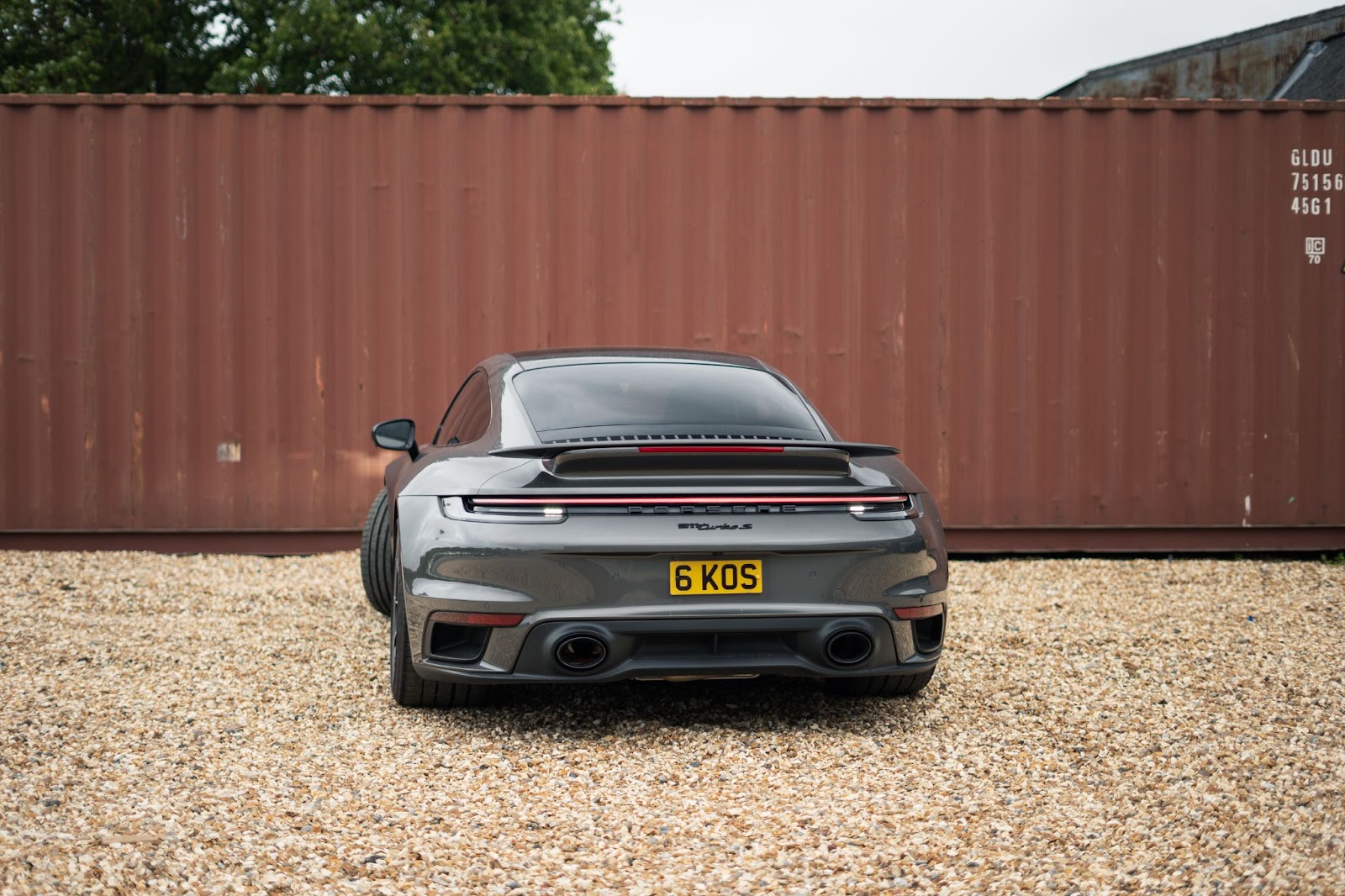
At number one, we had to include the most iconic of all rear engine cars and one that’s still immensely popular today, the Porsche 911. Before this model arrived in 1963, there was the 356, a concept cooked up by Ferdinand Prosche’s son Ferry. He said, ‘In the beginning, I looked around and could not find quite the car I dreamed of, so I decided to build it myself.’
The engineers at Porsche kept on dreaming, and that’s how the 911 came to be. It’s an example of how a flat engine works so well in the rear, and over the decades, the driving experience has been honed to perfection. It’s an exciting challenge for drivers, as you need to know how to handle the dynamics to really see what it can do.
- Volkswagen Beetle
The man behind the original people’s car was none other than Ferdinand Porsche, so it’s fair to think of it as a precursor to the 911. He said, ‘It’s not technology that makes history, but the people who invented it.’ We can’t help but agree when it comes to his legacy and rear engine cars.
Not an iconic sports car this time, but an affordable and popular cultural phenomenon. It’s another of the rear-engine layout vehicles that has stood the test of time. Back in 1972, it broke the Ford Model T production record, showing just how in-demand it was. It continues to demonstrate how economy combines with rear-wheel drive to deliver excellent handling.

- Renault Alpine A110
This car made its mark at the Monte-Carlo Rally, and it’s not the last rally car you’ll see on this list. It’s no surprise that the man behind the Alpine, Jean Rédélé, was a driver and motorsport fan. Out of all the cars with engines in the back, it’s one of the firm favourites with petrolheads. That’s surely down to the famous blue bodywork and sleek shape, both of which belie its aggressive and tough nature.
Its ability to perform on demanding tracks is what has made drivers and spectators appreciate the car. It’s the classic that we’re focusing on here, although Renault produced the A110-50 concept car to celebrate its birthday. Plus, you can drive a modern equivalent, although it has a rear-mid engine.

- DeLorean DMC-12
One of the most talked about rear engine cars is the DeLorean DMC. While it never quite lived up to the hype, it certainly has earned a place in pop culture, if not automotive history. The wedge shape, futuristic gullwing doors and appearance in ‘Back to the Future’ are what make it iconic.
The production line wasn’t in operation for long, so we’ll never know what would have happened once the design was refined. The DeLorean Alpha5, an electric sports car that takes its inspiration from the original design, will be something else altogether.

- Fiat 500
Another compact car that needs no introduction is the Fiat 500. It made a recent comeback, but it was the original production that launched an icon. Fiat designed it as a direct competitor to the Beetle, and the rear-engined city car was an instant hit, with around four million produced between 1957 and 1975.
The zippy steering, smooth ride and excellent handling are what drivers appreciate. It’s the unique style that has made it a memorable vehicle. Plus, the ability to reinvent itself for modern demands has helped it stick around.

- Chevrolet Corvair
While it’s the mid-engine Chevrolet Corvette that most people think of when they’re picturing a Chevy, the Corvair is a rear-engine icon. It was pretty unusual to see an American-designed air-cooled rear-engine passenger car when it became popular in the 1960s. It was a whole new approach, with a unibody frame and wide low-profile tyres.
It was the sportier models that made the Corvair successful, including the Corsa and the Monza. The flat-engine made it an appropriate rival to the Porches that returning soldiers had experienced in Europe.

- BMW 700
It’s not the handling, the appearance or the innovation that earns the BMW 700 its place among iconic rear engine cars. If you’re surprised to see an economy car from BMW, let alone one that made this list, then it’s time to dig into this small family car’s history.
The story goes that BMW was on the verge of bankruptcy when the 700 revived its fortunes. Its superb build and affordable price point made it a success. It prevented the company from being swallowed by larger manufacturers, giving it a future where it designed so many of the BMW cars that we know and love today.

- Ginetta G4
The 1960s was the peak decade for cars with engines in the back, and the Ginetta G4 is a British icon of the 60s. Built by Ivor Walklett, one of the four brothers who ran Ginetta, this road-going race car turned heads wherever it went.
The rear engine and independent rear suspension gave it an advantage on the track. It was available in kit form, and several drivers raced it on the circuits. Racing driver John Burton said, ‘The G4 was a lot of fun to drive, and it put many more powerful cars to shame.’
- RUF CTR Yellowbird
Moving on from the 1960s, we come to an 80s classic and one of the rarer rear engine cars. While it certainly borrowed from Porsche, it brought its own style and aggressiveness, making it a pleasure to drive for anyone lucky enough to get the chance.
Only 29 were made, but they changed the supercar landscape. It takes its name from its bright yellow paintwork and also from the man who made it, Alois Ruf. Hitting 211 mph at the Nurburgring, the CTR proved that the rear engine wasn’t dead and made people sit up and take notice.
- Smart Roadster Brabus
Better known for its partnership with Mercedes, we’re looking at you, Brabus. Brabus partnered with Smart to produce an unlikely entrant into the rear-engine icons category. It bridges the gap between the economy cars and sports cars on our list by looking great, handling well, delivering efficiency and being an excellent city car.
It’s not everyone’s cup of tea, but this modern icon shows that a ride in a rear-engine car still has its thrills. Like the DeLorean, it never reached its full potential before it got cancelled. With a little work on the costs, speed and space, it could have changed our idea of sports cars.

Why Rear Engine Cars No Longer Dominate
There were plenty of reasons to make cars with engines in the back 60 years ago. However, with modern technology and advances in car design, we’ve found other solutions to those issues.
The primary reasons were to create more space for luggage and passengers, although putting the engine closer to the drive axle also made cars more efficient. Plus, extra weight at the back helped with mechanical grip. Now that we have AWD, FWD and improved interior design for space-saving, most of those reasons are redundant.
It’s mostly in motorsport that the configuration has stayed popular since professional drivers are adept at handling the oversteer that comes with a rear engine.
While Porsche managed to refine the cooling ability of a flat rear engine, it’s not a challenge that every car manufacturer wants to take on. Still, it’s a unique driving experience, and every petrolhead should get behind the wheel of a 911 at least once in their life.
 Please wait...